THE PENDING DRAFT

picu is available in Public Beta since yesterday

September 2, 2015

Since yesterday you can download picu from WordPress.org as a Public Beta. We hope to gather as much feedback as we can from an even broader range of photographers.

Download it, test it, rip it apart, review it, send us your inputs. But please don’t forget that picu is in “public beta” and just learned to walk, so please be kind to it :)

picu on WordPress.org – Client Proofing for Photographers

WordPress Plugin – Airplane Mode

June 27, 2015

WordPress makes a whole bunch of connections when you are using the Dashboard. For example to fetch external files like fonts or to display the latest news and so forth. While this is convenient in most situations, it can completely slow you down or lead to error messages when you are on a slow/unstable connection or don’t have a connection at all, as we had this week. The solution to this is called Airplane Mode, a WordPress Plugin by Andrew Norcross which disables all external calls from WordPress.

Control loading of external files when developing locally. WP loads certain external files (fonts, Gravatar, etc.) and makes external HTTP calls. This isn’t usually an issue, unless you’re working in an evironment without a web connection. This plugin removes/unhooks those actions to reduce load time and avoid errors due to missing files.

GitHub – Airplane Mode

Pro Plugin Directory

June 14, 2015

Premium WordPress plugins have a price and are ineligible for the official plugin directory. Pro Plugin Directory is a place to discover premium WordPress plugins. 100% GPL.

A growing directory of Premium WordPress Plugins.

Pro Plugin Directory

WordPress Plugin Profiler

April 29, 2015

plugin-profiler

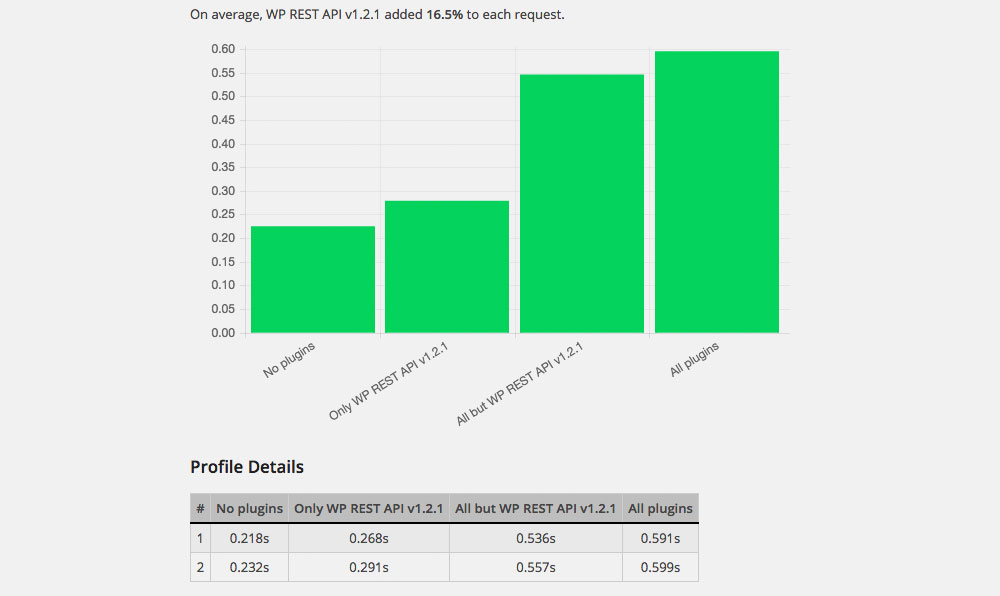
Contrary to popular belief, adding plugins to your WordPress site is not necessarily harmful to the performance of your page. One “bad” plugin alone can potentially bring your site down while the site can run smooth with a 100 installed plugins. It all depends on which plugins you install and how they are built.

Luckily, there are tools like this little plugin i just found called Plugin Profiler by Danny van Kooten. It measures the loading time with all plugins deactivated, all activated and both in combination with a plugin you specifically choose.

The only thing you need to do for it to work properly is manually add a file in your mu-plugins folder and after that it’s really easy to use. Choose which plugin you want to check and how many test-runs you’d like and let it do it’s work. Kinda like magic.

I don’t know how accurate the results are and what exactly is going on under the hood to measure them, but i’m sure it’s a good indicator if something is going wrong with a plugin.

What do you use to check Plugin Performance before installing/activating?

WordPress Plugin Profiler

Using Nonces to prevent Request Forgery

March 29, 2015

Put simply, CSRF is when bad guys try to trick users (usually someone with access to the WordPress dashboard) into doing something they didn’t intend to do.

This article on CSS-Tricks is the second in a series of articles about WordPress Frontend Security. In this one Andy Adams explains CSRF (Cross-Site Request Forgery) and what nonces are, how they are used in WordPress and why it’s so important that you use them.

CSS-Tricks on WordPress Frondend Security – CSRF and Nonces

Lazy Load XT

February 16, 2015

If you work with a lot of images, performance issues can quickly add up and become pretty complicated to tackle. Lazy Loading is one popular technique how we can approach this and with Lazy Load XT there seems to be a new solution which also supports things like srcset, horizontal scrolling or video elements.

Images make up over 60% of an average page’s size, according to HTTP Archive. Images on a web page would be rendered once they are available. Without lazy loading, this could lead to a lot of data traffic that is not immediately necessary (such as images outside of the viewport) and longer waiting times.

Just recently i implemented jQuery Lazy Loading on a portfolio page and we were able to bring the pagesize down to some kilobytes (until first render) from what was around 4MB and even over 16MB on retina screens. The site was built some years ago, so srcset or <picture> elements weren’t an option and we used retina.js which was quite fast, but loads the small version and then the retina version on top. Not ideal, i know.

So, lazy loading was a great help in reducing all that, but when implementing it i struggled not only with some possible negative SEO implications (which i’m still trying to fully understand) but also it was very hard to combine retina.js with the jQuery Lazy Loading.

Lazy Load XT is a new script which uses jQuery, Zepto.js or DomTastic to deliver lazy loading functionality and it includes srcset support as well as many other of the things i missed. Also, i like the modular way it is built which let’s you choose which plugins or extensions you need and thus let you save some more kb’s from your bottom line.

Redefining Lazy Loading With Lazy Load XT
WordPress Plugin – Raph

February 5, 2015

The use of shortcodes in WordPress can often end up in a big mess when changing a theme or removing a plugin. Raph is a Plugin which let’s you convert shortcodes to HTML, right inside the editor. That way you can disable the plugin and still have the actual rendered output in your content, without the need for a shortcode.

Shortcodes may be useful, but rendering them “on the fly” can be a performance killer.

Moreover, shortcodes added by themes or by plugins, lock you in with those products, because you if you change theme or uninstall plugins that add shortcodes, your content will be bungled when not lost.

Have you ever desired get rid of a plugin, but can’t because of shorteds? Now you can.

I think this is actually a pretty smart idea! Check it out on GitHub.

Raph on GitHub

Check for Plugins that are no longer in the Plugin Directory

February 4, 2015

If a plugin gets pulled from the official plugin directory on WordPress.org there could be several reasons for that. Could be that it just became obsolete when a new version of WordPress introduced the features it provided, could be that the developer just stopped developing it, but it could have also been deleted because serious security issues were detected with the plugin. No matter what the reason was, it means you no longer get update notifications and could potentially run into security risks later on.

Today i discovered this little plugin which checks for plugins no longer in the directory and tested it on a local copy of a client site. In addition to removed plugins it also displays if a plugin wasn’t updated in more than two years, which is also nice to know. Keep in mind that this doesn’t give you perfect safety, a plugin can still be in the directory and be outdated or insecure. But if it was removed it’s definitely a good idea to investigate further and to check for alternatives.

WP Plugin – No Longer in Directory

picu

January 28, 2015

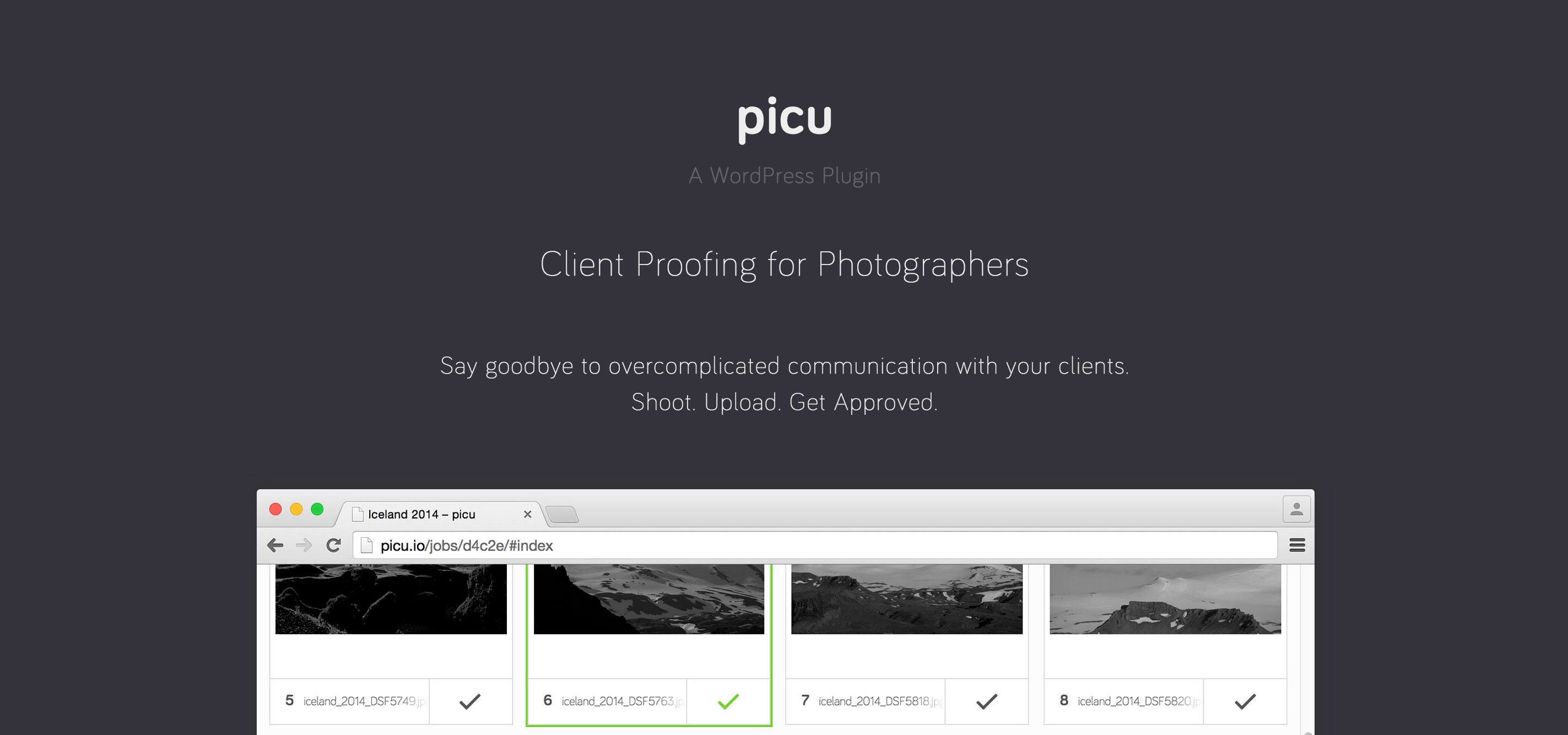
picu - Client Proofing for PhotographersWe finally announced our upcoming WordPress plugin “picu” today. It’s a client proofing solution for photographers, which intends to bridge the gap between the photo shooting and the following selection process with a client. The idea initially came up during the development of a photography website, when the client told me that he was searching for something like this for a very long time and wasn’t satisfied with any of the options available. After a bit of back an forth, Florian and I decided to give it a try and started with the development soon after.

Right now we just started with a closed alpha phase in which we will gather some further feedback from a broader range of photographers in different fields and soon we will launch a public beta. Everything’s still a bit rough around the edges and we have tons of ideas how we can improve and make this thing even more useful for photographers. But as Reid Hoffman, the founder of LinkedIn, once famously said:

If you are not embarrassed by the first version of your product, you’ve launched too late.

Let’s see how embarrassing it will be. Exciting times, stay tuned!

picu.io