THE PENDING DRAFT

Scott Bollinger on 2015 WordPress Business Statistics

May 23, 2015

It’s a common trend among open source businesses to share their statistics in some form of a transparency report. Scott Bollinger collected some of those statistics from various WordPress businesses who shared their numbers this year and compared them.

It’s mostly for statistical data for presentations, and to analyze what business models people are using. I also have some knowledge that isn’t public information (from my own businesses, and people I know) that gives me a little extra insight.

But he also adds that you probably shouldn’t compare yourself too much as none of them were overnight successes. Plus, it’s mostly the successful companies sharing numbers.

Personal note to all my fellow business owners: don’t compare yourself and feel bad because you aren’t making what some of these businesses are. There is a lot of back story to these that you don’t know about, none of these people were overnight successes. If that’s you, read this post by Matt Medeiros.

A very insightful post and i find it pretty incredible what some of them achieved.
2015 WordPress Business Revenue Statistics

Automattic acquires WooThemes

May 20, 2015

Today Automattic announced the acquisition of WooThemes. With a rumored price of $30 million in cash and stock and the integration of 55 employees into their existing teams this is by far the largest acquisition for Automattic as well as in the larger WordPress space. Yet for a company that dominates the e-commerce world like Woo does, with a quarter of all online-stores running on WooCommerce, this still seems like a reasonable price. I’m sure those two teams are a great fit and i’m looking forward to what they can build together.

WooThemes – Official Announcement
Some more words about the acquisition from Matt Mullenweg

Quotes on Design fetches Quotes using the WP-API

May 13, 2015

Quotes on Design is a page that serves quotes about design, curated by Chris Coyier. They just rebuilt it using the WP-API to fetch posts from WordPress.

Up to this point, Quotes on Design (QoD) used a bit of custom code to query the WordPress database and serve up quotes. This was used for the site itself, and for its API to allow use on external sites. With the excitement surrounding the upcoming WordPress JSON REST API, we thought it would be fun to rebuild the site to use the WP API instead of our own custom code.

It’s nice to see more and more real world examples using the WP-API popping up lately. In this post on CSS-Tricks, Andy Adams details exactly how they built it which makes it a perfect tutorial if you want to get familiar with the WP-API.

Using the WP-API to Fetch Posts

OptinMonster – from WP Plugin to SaaS

May 12, 2015

Last week, OptinMonster quietly announced their new stand-alone SaaS tool. In a post on his personal blog, Syed Balkhi shares some more of the reasoning behind that step as well as a little bit about the technical side of things.

Many of you may know OptinMonster as a powerful WordPress lead generation plugin that we created. Well, it’s no longer just a WordPress plugin.

OptinMonster is now a stand-alone (SaaS) lead generation tool that can be used on any website platform. Yup that means WordPress, Drupal, Joomla, Shopify, Magento, BigCommerce, and basically any HTML website.

He also promised to share some more technical details very soon.

Converting a WordPress Plugin into a SaaS

Pippin Williamson on Backwards Compatibility

May 8, 2015

Pippin Williamson with a great presentation at LoopConf about Backwards Compatibility and why it’s such an important thing to think about when you develop plugins. He covers many examples of what could happen if you break things and how to avoid those issues.

Backwards compatibility is a cornerstone of WordPress core development philosophy. It is, unfortunately, not something nearly enough plugin or theme developers take seriously. When a plugin or theme project gains 10s or 100s of thousands of users, backwards compatibility can be crucial to the overall health of the project.

Ensuring backwards compatibility is more of a mental mindset than anything. Developers have to mentally make the commitment and say to themselves “I will NOT break installs during upgrades”.

As we are building our own plugin at the moment, Backwards Compatibility is something i think about a lot lately, because as soon as we have it released, some things will be impossible or much harder to change so we better try to get it right the first time.

A Commitment to Backwards Compatibility

Rewriting URLs in WordPress

May 5, 2015

The Rewrite Engine of WordPress is one of the parts of WordPress that can be confusing at first and that i personally never liked to customize at the beginning. Basically just because it normally worked the way it should and i didn’t want to break anything by adding custom rules. But custom rewrite rules can be a very powerful thing, especially if you’re building custom solutions for clients or a web app on top of WordPress. This post covers the basics and various code examples of how to implement your custom rewrite logic in WordPress.

Rewriting URLs in WordPress

WordPress Theme Repository Data

May 1, 2015

Have you ever wondered how many Themes in the official WordPress repository support the Customizer? Or how many are based on the Underscores base theme?

Devin Price grabbed all themes from the repository and ran some test to find out.

I don’t intend to repost his findings here, so head over to his post on WP Theming and dig through the numbers yourself. He also shared how he did it and what tools he used if you’re keen to run some tests of your own.

WP Theming – Theme Repository Data

WordPress Plugin Profiler

April 29, 2015

plugin-profiler

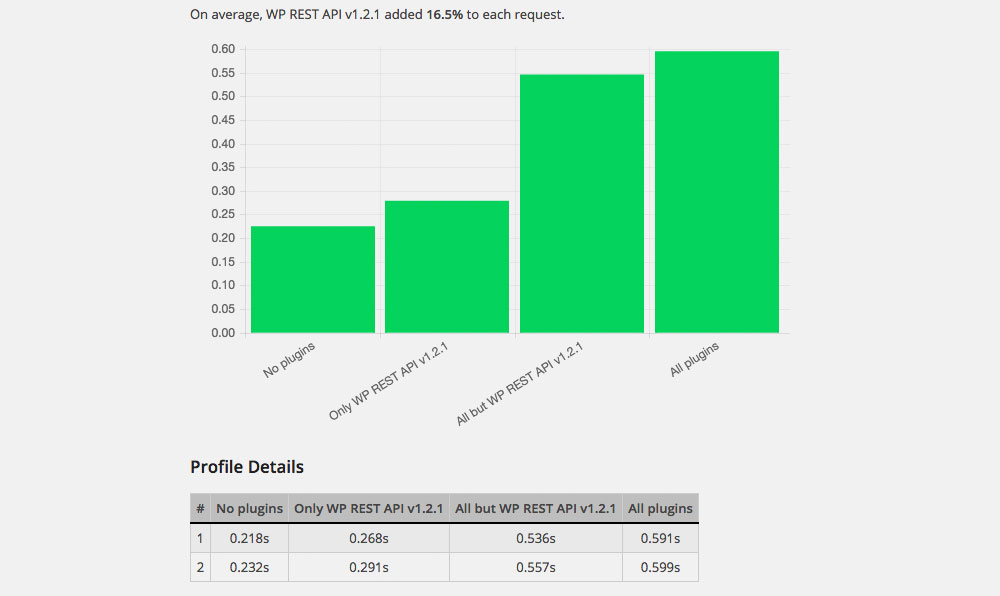
Contrary to popular belief, adding plugins to your WordPress site is not necessarily harmful to the performance of your page. One “bad” plugin alone can potentially bring your site down while the site can run smooth with a 100 installed plugins. It all depends on which plugins you install and how they are built.

Luckily, there are tools like this little plugin i just found called Plugin Profiler by Danny van Kooten. It measures the loading time with all plugins deactivated, all activated and both in combination with a plugin you specifically choose.

The only thing you need to do for it to work properly is manually add a file in your mu-plugins folder and after that it’s really easy to use. Choose which plugin you want to check and how many test-runs you’d like and let it do it’s work. Kinda like magic.

I don’t know how accurate the results are and what exactly is going on under the hood to measure them, but i’m sure it’s a good indicator if something is going wrong with a plugin.

What do you use to check Plugin Performance before installing/activating?

WordPress Plugin Profiler